Key takeaways
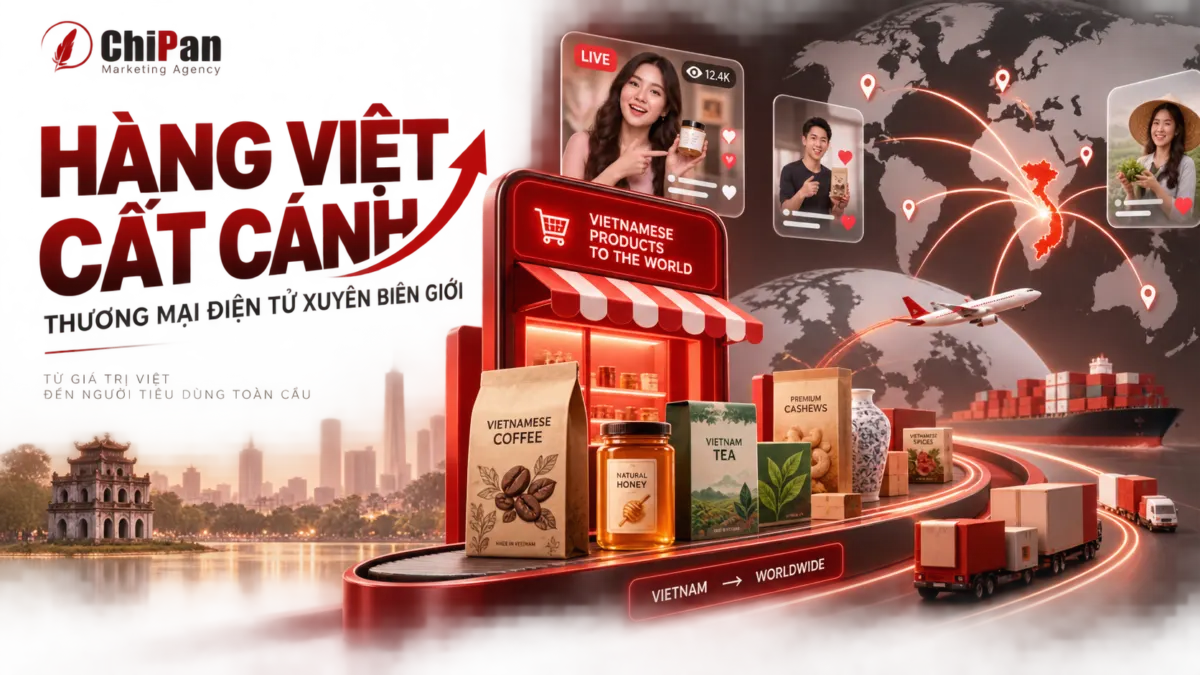
The Vietnamese goods initiative took off to open more opportunities for cross-border sales. See 7 Enterprise Platforms to Prepare Before Expansion.
Cross-border sales are no longer just for businesses with offices in many countries. Short content, livestream, Creator and e-commerce platform are helping products reach international customers on a new journey.
However, access opportunities do not mean the ability to operate. In order for a Vietnamese product to be sold sustainably in another market, businesses need to simultaneously prepare brand, content, legal, logistics and data.
What is “Vietnamese goods taking off”?
On September 3, 2026, the Department of E-commerce and Digital Economy in collaboration with TikTok Shop launched the Beyond Vietnam initiative - "Vietnamese goods take off". The program aims to support Vietnamese businesses to exploit cross-border e-commerce through short videos, livestream and innovator ecosystem.
Information published on Portal of the Ministry of Industry and Trade.
This is a positive signal, but businesses should not start with the question "What market to post". The first question should be: Is the product ready to be understood, trusted and delivered to customers in another market?
7 platforms to prepare before cross-border sales
1. Choose products with clear advantages
The right product is not necessarily the best-selling product in the country. Evaluate size, weight, durability, preservation requirements, profit margin and storytelling ability.
A product with a characteristic origin, raw material or practice is often easier to build content than a product that competes only by price.
2. Check legal and industry conditions
Each market has different regulations on labels, ingredients, publications, intellectual property and advertising. Enterprises need to verify current conditions with the platform and professional units before receiving the application.
Do not use marketing content in Vietnam and then translate verbatim to other markets, especially with food, cosmetics and health products.
3. Standardization of packaging and product information
Customers need to understand what the product is, how to use it, what to pay attention to and who to contact when there is a problem. The information on the packaging, booth, video and after-sales document must be consistent.
4. Build Translated Brand Story
The story should focus on the value the buyer can feel: raw materials, workmanship, usability, origin or positive impact. Avoid relying too much on idioms, local contexts or difficult statements to verify.
5. Design localized content
Localization is not just language translation. Enterprises need to adjust examples, images, units of measurement, price presentation, posting time and creator suitable for each market.
A content process can include:
- The video explores the problem.
- Video demonstration or instruction.
- Livestream answers questions.
- Content from native Creator.
- Product page Purchase information and conditions of purchase.
6. Fully calculate logistics and after-sales costs
The selling price should reflect the foundation fee, shipping, packing, return, tax and customer care costs. High revenue but a large return rate can cause the campaign to lose its effectiveness.
7. Track data by market
Do not include all countries in one report. Keep track of views, click-through rates, conversions, single-values, refunds and complaints by market, product, and creator.
90-day test route
Stage 1: Verification of availability
Choose one to three products, review the legal, complete the document and recalculate the cost.
Stage 2: Test content and needs
Produce a group of localized videos, try on a small scale and record actual questions from customers.
Stage 3: Complete operation
Check packing, delivery time, customer feedback and return process before expanding the budget.
Stage 4: Conditional expansion
Only increase production when order quality and after-sales capacity are stable.
Frequently Asked Questions
Can small businesses sell across borders?
Yes, if starting with small range and suitable product. Do not open multiple markets at the same time without an operational team.
Are livestreams enough to sell in other markets?
Livestream helps to create trust and answer quickly, but still need product pages, logistics, payment and synchronous customer care.
Should the price drop sharply to enter the market?
Prices may support testing, but businesses need to calculate the cost and build a reason for buying outside of the promotion.
Conclude
"Vietnamese goods take off" create more motivation for businesses to enter the international market. Success will belong to brands that consider cross-border e-commerce as an operating system, not just a communication campaign.
Chipan can accompany from building sales channels, content, livestream to Operating E-Commerce according to the roadmap in accordance with the enterprise's capacity.

ChiPan Marketing AgencyFrom creative work, content and advertising to restructuring marketing, sales channels and the operating model.